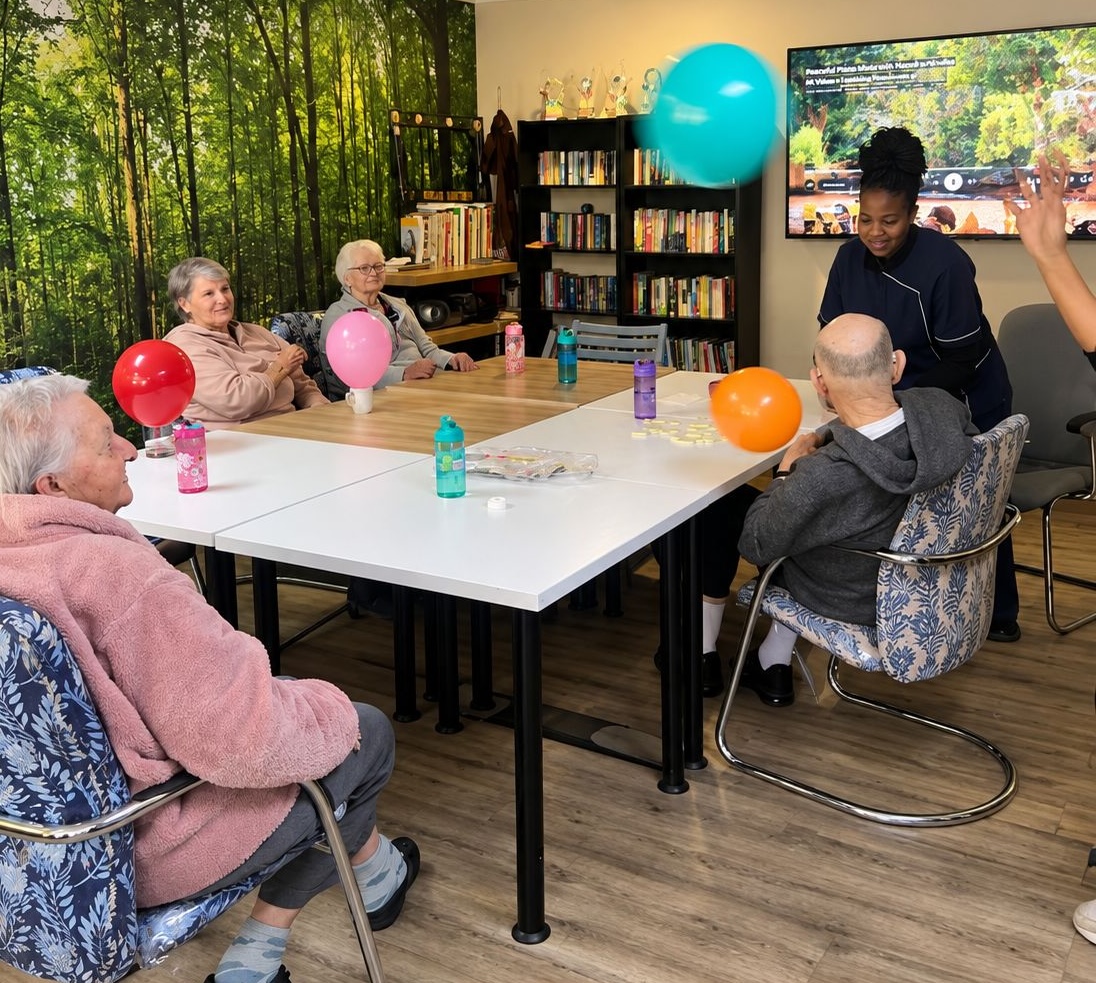
Moving a loved one into a memory care facility can bring many emotions for a family. Alongside the reassurance of knowing that specialised care and support are available, there can also be concerns about what everyday life will look like.
Will they still see people? Will they have opportunities to socialise? Will they remain connected to family and the wider community? Or will their world gradually become smaller?
At Protea Memory Clinic, we believe that moving into specialised dementia care should never mean becoming disconnected from life. Human connection, companionship and a sense of belonging remain important at every stage of the dementia journey.
That is why creating opportunities for residents to interact with family, friends, fellow residents and the broader community is an important part of life at PMC.
Why Social Connection Matters
Dementia may affect memory and communication, but it doesn’t remove a person’s need for companionship. Research into long-term care has identified social connection as an important contributor to quality of life. For people living with dementia, meaningful interaction can provide opportunities for participation, enjoyment and engagement.
Social isolation and loneliness, on the other hand, can negatively affect well-being. Research has associated social connection in long-term care with mental and physical health outcomes, while relationships between residents, staff and family are considered an important part of person-centred care.
This means quality dementia care should look beyond physical and medical needs.
Residents need opportunities to connect, participate, laugh, listen, share and simply enjoy being around other people.
A Care Facility Can Become a Community
There can be a misconception that moving into residential dementia care means leaving one’s community behind. The opposite can be true.
A good memory care environment can create new opportunities for connection, particularly for someone who may previously have been spending increasing amounts of time alone at home. Living alongside other residents creates opportunities for everyday interaction, while shared meals, activities and events can bring people together naturally.
At Protea Memory Clinic, we want residents to feel that they are part of a community rather than simply living in a care facility.
Bringing the Wider Community Into PMC
Connection at PMC extends beyond interactions between residents and staff. Over time, our residents have enjoyed visits and performances from a variety of people and groups from the wider community.
School choirs have brought younger generations into PMC. Musicians and groups such as Quattro Voci have performed for residents. Pet therapy visits provide another form of companionship and stimulation, while special celebrations and events create opportunities for residents, families and visitors to spend meaningful time together.
These experiences may appear simple, but they can bring enormous enjoyment. A familiar song can encourage someone to sing along. A visiting child may prompt a smile or conversation. An animal can provide comfort without requiring words. A family gathering can create moments of connection even when memories themselves are becoming more difficult to hold onto.
Research into intergenerational programmes involving people living with dementia has also found encouraging results, including increased pleasure and reduced disengagement during some programmes.
We also warmly welcome involvement from our local community. If you are in the Durbanville area and would like to organise a community outreach programme, volunteer your time, or share a special talent or activity with our residents, we would love to hear from you. Please contact Protea Memory Clinic on 021 910 1078 to discuss how you can get involved and help create meaningful moments for our residents.
Family Remains Part of the Journey
Moving into memory care doesn’t mean that family involvement ends. For many families, it simply changes.
Instead of spending every visit worrying about medication, meals, personal care or whether their loved one is safe, residential care can allow family members to spend more time simply being a daughter, son, spouse, partner, grandchild or friend again.
At Protea Memory Clinic, we value family involvement and want families to remain part of residents’ lives. Family gatherings and events provide opportunities to enjoy time together within the PMC environment, while our open-door approach means families can ask questions, raise concerns and seek guidance as their loved one’s needs change.
We also recognise that dementia affects the entire family. Our free support group sessions, which are open to the public, provide another opportunity for people affected by dementia to connect with others who understand some of the challenges of the journey.
Meaningful Interaction Doesn’t Always Require Conversation
As dementia progresses, verbal communication can become more difficult. But connection doesn’t depend entirely on words.
Music, touch, facial expressions, movement, shared activities and simply sitting alongside another person can all become ways of connecting. Research into music in dementia care, for example, has explored its ability to facilitate social interaction, particularly when conventional communication becomes more difficult.
This is why activities at PMC are not simply designed to keep residents busy. Music, creative activities, gardening, exercise, celebrations and social events provide different opportunities for residents to participate at a level that feels comfortable and appropriate for them.
Sometimes participation may mean actively joining an activity. On another day, it may simply mean sitting nearby, listening to music or watching what is happening. Both can be meaningful.
Creating a Life, Not Just Providing Care
Specialised dementia care understandably needs to prioritise safety, personal care, nutrition and medical needs. But these things alone don’t create quality of life. People need warmth. They need familiar faces. They need stimulation, companionship and moments of enjoyment. They need to feel that they still belong somewhere.
At Protea Memory Clinic, our approach to dementia care considers the whole person. Alongside personalised care and our high level of individual support, we work to create an environment where residents can continue to experience meaningful everyday life.
Our beautiful gardens and ongoing garden project provide spaces for residents to spend time outdoors and with others. Our activities encourage participation. Our community visitors bring new energy into the facility. Our family events help maintain important relationships. And our dedicated team provides the familiar faces residents see every day. Together, these elements help turn a care facility into a community.
Choosing Memory Care Is About More Than Care
When families visit a memory care facility, it is natural to ask about nursing, safety, meals, staffing and accommodation.
But there is another question worth asking: What will my loved one’s life actually look like here? Look at whether residents have opportunities to socialise. Ask about activities and events. Find out whether families are encouraged to remain involved. Ask whether people from the wider community visit the facility. Most importantly, consider whether the environment feels like somewhere people are living, rather than simply somewhere they are being cared for.
At Protea Memory Clinic, that distinction matters to us. A dementia diagnosis may change someone’s abilities, but it should never remove their need for friendship, family, belonging, enjoyment and connection. Our goal is to provide the specialised care residents need while continuing to create opportunities for the meaningful moments that make everyday life worth living.
References
Alzheimer’s Society – Social isolation and dementia risk
Explores the relationship between social isolation, social activity, cognitive health and dementia.
https://www.alzheimers.org.uk/about-dementia/managing-the-risk-of-dementia/reduce-your-risk-of-dementia/social-isolation
Assessing Social Connection for Long-Term Care Home Residents: A Systematic Review
Research examining social connection as an important component of quality of life and care for long-term care residents.
https://pmc.ncbi.nlm.nih.gov/articles/PMC11299077/
Social Interactions of Persons with Dementia Living in Special Care Units in Long-Term Care: A Mixed-Methods Systematic Review
Research examining social interaction, relationships, engagement and quality of life among people living with dementia in specialised care settings.
https://pmc.ncbi.nlm.nih.gov/articles/PMC8044601/
Effectiveness of Intergenerational Participation on Residents with Dementia: A Systematic Review and Meta-Analysis
Research examining the effects of intergenerational programmes involving people living with dementia.
https://pmc.ncbi.nlm.nih.gov/articles/PMC8859040/
Analysing the Use of Music to Facilitate Social Interaction in Care Home Residents with Dementia: A Systematic Review
Examines how music-based activities can support interaction and engagement among people living with dementia in residential care.
https://pmc.ncbi.nlm.nih.gov/articles/PMC12064862/
World Health Organization – Risk Reduction of Cognitive Decline and Dementia: WHO Guidelines, Second Edition (2026)
The latest WHO guidance identifies social isolation among the potentially modifiable factors associated with dementia risk.
https://www.who.int/publications/i/item/9789240123557