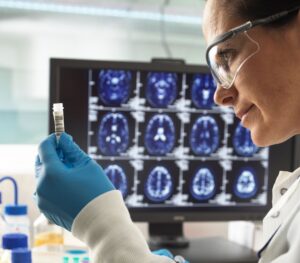
Imagine a world where detecting the earliest signs of Alzheimer’s disease doesn’t require an expensive brain scan or invasive spinal test – just a simple blood sample. That world is now much closer to reality.
In May 2025, the U.S. Food and Drug Administration (FDA) approved the first blood test designed to help doctors detect biological signs of Alzheimer’s disease. The test measures two key proteins in the blood – phosphorylated tau (pTau217) and beta-amyloid 1-42 – which are linked to the changes seen in the brains of people living with Alzheimer’s.
This marks an exciting step toward more accessible, earlier detection of Alzheimer’s, allowing for better planning and more personalised care.
How the Blood Test Works
Called the Lumipulse G pTau217/β-Amyloid 1-42 Plasma Ratio, this test uses a regular blood draw to analyse specific protein levels. It’s intended for adults aged 55 and older who show signs of memory or thinking changes – not for routine population screening.
Doctors can use the results to support an Alzheimer’s diagnosis, alongside other assessments such as memory testing and imaging.
What This Means for Families
For families concerned about memory loss or early cognitive changes, this test offers both hope and perspective:
- Earlier answers: Identifying biological changes sooner allows for proactive care, lifestyle adjustments, and emotional preparation.
- Less invasive: Blood tests are quicker, easier, and more accessible than PET scans or spinal fluid testing.
- Not a standalone diagnosis: A blood test result always needs to be interpreted within a full medical context.
- Good questions to ask your doctor:
- “Would this test be useful for us?”
- “How reliable are the results?”
- “What would we do differently depending on the outcome?”
A Thought from Protea Memory Clinic
At Protea Memory Clinic, we believe knowledge empowers families. New tools like this blood test highlight the progress being made in understanding Alzheimer’s – but compassionate care, clear communication, and early support remain at the heart of every journey.
If you or someone you love is experiencing memory changes, starting a conversation now can bring reassurance and direction.
References
- U.S. Food & Drug Administration. FDA Clears First Blood Test Used in Diagnosing Alzheimer’s Disease. https://www.fda.gov/news-events/press-announcements/fda-clears-first-blood-test-used-diagnosing-alzheimers-disease
- Alzheimer’s Association. First Blood Test Used in Diagnosing Alzheimer’s Cleared by FDA. https://www.alz.org/news/2025/fda-clears-blood-test-alzheimers-diagnosis
- Medical News Today. First Blood Test for Alzheimer’s Gets FDA Green-light: 3 Things to Know. https://www.medicalnewstoday.com/articles/first-blood-test-alzheimers-gets-fda-greenlight-3-things-to-know
Fierce Biotech. FDA Clears Fujirebio’s Blood Test for Diagnosing Alzheimer’s Disease.https://www.fiercebiotech.com/medtech/fda-clears-fujirebios-blood-test-diagnosing-alzheimers-disease